


汤可可
博士,副教授,硕/博士生导师,力学系副主任,校基础力学课程教学负责人
电子邮箱:kktang@tongji.edu.cn
联系方式:021-65983708 (Office);13564087124 (Cell)
上海市嘉定区曹安公路4800号 同济大学嘉定校区迩楼206-4室
上海市杨浦区四平路1239号 同济大学四平校区力学实验中心216室
教育经历
2006/09-2011/06 东南大学 固体力学 博士
2003/09-2006/06 湖南大学 固体力学 硕士
1999/09-2003/06 湖南大学 工程力学 学士
科研经历
2019/01- 至今 同济大学 航空航天与力学学院 副教授
2014/09-2018/12 同济大学 航空航天与力学学院 助理教授
2011/09-2014/09 华东理工大学 机械与动力工程学院 博士后
2008/01-2009/12 乔治华盛顿大学 机械与航天工程系 联合培养博士生
学术研究
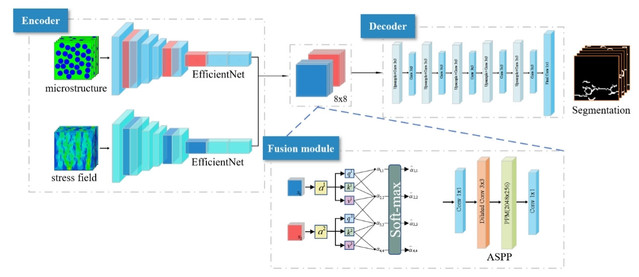
研究方向一:人工智能在材料疲劳与断裂领域的前沿应用
研究致力于深度融合物理信息神经网络(PINN)、语义分割等AI技术与相场断裂理论,以建立覆盖微观组织重建、裂纹演化预测到断口智能分析的下一代材料失效分析与设计框架。
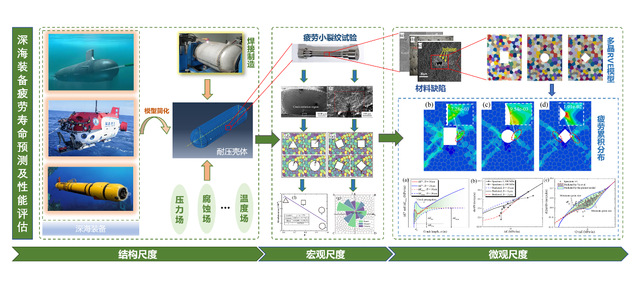
研究方向二:多尺度计算在材料与结构疲劳领域的应用
研究致力于深度融合晶体塑性有限元的多尺度计算方法,以建立从材料微观塑性变形预测到结构宏观疲劳失效评估的一体化分析框架,并推动其在深海装备寿命预测与性能优化中的前沿应用。
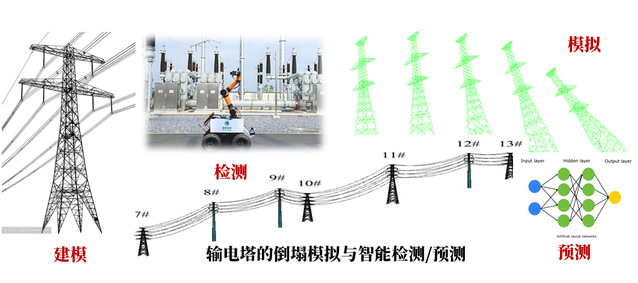
研究方向三:AI+电网安全:让铁塔学会“预警”
我们与电网企业共同探索一个前沿领域:用人工智能为输电塔装上“先知之眼”。在这里,用深度学习算法,让机器“看懂”铁塔的每一次损伤;用物理智能模型,提前推演倒塌的完整链条。我们正在构建国内首个融合算法、计算机视觉、时序预测与力学仿真的智能体“AI塔防系统”。
截至2026年7月,已累计发表学术论文100余篇。近三年以第一作者或通讯作者(共同)身份,在 J. Mech. Phys. Solids、Int. J. Solids Struct.、Comput. Methods Appl. Mech. Eng.、Int. J. Fatigue、Compos. Sci. Technol.、Int. J. Mech. Sci.、Engineering 等高水平期刊发表SCI论文40+篇,Google Scholar 引用次数超过1000次。通过融合多学科交叉特色,逐步构建了智能化的材料失效分析与设计评估框架。
学生培养
课题组资源配置合理,拥有持续稳定的经费支持。团队凝聚力强,形成了良好的学术氛围。导师重视学生个人特点与兴趣,施行个性化培养方案,充分激发学生潜力,促进其学术成长与个人发展。课题组不仅定期组织并资助学生参加国内外高水平学术会议,还与行业领先企业保持紧密合作,共同搭建连接前沿理论与工程实践的培养平台,为学生创造全面的能力锻炼与职业发展机会。
课题组与国内外多所知名高校与研究所建立了深度合作关系,包括东南大学、浙江大学、中国科学院力学研究所、以及美国佐治亚大学 (University of Georgia, UGA)、德克萨斯农工大学 (Texas A&M University, TAMU)、德国达姆施塔特大学 (Technische Universität Darmstadt) 等海外院校。浓厚的科研氛围下,课题组已有学生连续四年获得海外知名大学博士深造机会(2022-2023年佐治亚大学、2024年德克萨斯农工大学、2025年卡耐基梅隆大学)。毕业生主要就业于上海商飞、比亚迪、联合汽车电子、国家电网等业内领先企业。
课题组指导学生成果突出:指导本科生以第一作者身份在国际高水平期刊发表论文多篇;指导的研究生多次荣获同济大学优秀硕士学位论文(2021-2023年,2025年);自2022年以来,累计3人次获得研究生国家奖学金,10人次在国内外学术会议上获最佳学生报告奖。学生亦多次在力学与复合材料领域顶尖国际会议(如2024年世界力学家大会、2024年亚澳复合材料大会)上作学术报告并获奖,指导研究生入选2025年度中国科协青年科技人才培育工程博士生专项计划。
2027年课题组招生计划:
博士研究生:名额已满。
硕士研究生(学术型/专业型):现有3个名额,欢迎力学、机械、航空等方向考生踊跃报考。
代表性科研项目
上海市自然科学基金面上项目,25ZR1401355,基于语义分割的增材制造长纤维复合材料缺陷识别与结构重建,2025/07-2028/06,主持.
国家自然科学基金面上项目,11872278,钛合金疲劳小裂纹扩展的多尺度分段模型与原位试验研究, 2019/01-2022/12,主持.
国家自然科学基金青年项目,11302078,高温钛合金蠕变疲劳交互作用的双尺度裂纹模型修正,2014/01-2016/12,主持.
上海市自然科学基金面上项目, 21ZR1467200,钛合金微观几何缺陷致裂机理及疲劳全寿命预测研究,2021/07-2024/06,主持.
主讲课程
理论力学、材料力学、工程力学(I, II)、力学原理等。
学术兼职
国家自然科学基金函评专家;《力学季刊》编委及执行编辑;担任Nat. Commun., Int. J. Fatigue、Compos. Sci. Technol., Int. J. Mech. Sci., Theor. Appl. Fract. Mech. 等数十个国际学术期刊的评审专家; ICEAF国际学术委员会成员;上海市力学学会第十四届理事会教育工作委员会秘书长。
荣誉获奖
同济大学优秀硕士论文指导教师,2021/2022/2023, 2025
国际大学生工程力学竞赛优秀指导教师,2025
全国周培源大学生力学竞赛优秀指导教师,2025
同济大学优秀本科毕业设计指导教师,2025/2026
上海市大学生力学竞赛优秀指导教师,2024
同济大学师德师风优秀教师提名奖,2023
中国力学学会徐芝纶力学优秀教师奖,2021
同济大学第八期名课优师,2021
航力学院我最喜爱的老师,2019
上海市力学学会优秀青年力学学者,2018
同济大学优秀班主任,2017
第14届国际断裂大会分会场主席,2017
Wiley期刊Top Reviewer Award,2017
全国基础力学青年教师讲课比赛二等奖,2016
上海市力学学会先进工作者,2015, 2021
期刊论文(2022年-至今)
Peng Zhang, Keke Tang*, Baixiang Xu. ChebyKAN-enhanced deep energy method for phase field fracture: From homogeneous to heterogeneous materials. Journal of the Mechanics and Physics of Solids, 2026, 214: 106693.
Guangxv Chen, Zhenduo Zhang, Xianqiao Wang, Keke Tang*. Understanding in-plane geometry effects via correlating macro 𝑇 -stress to micro-scale slip intensity: A dual-scale crystal plasticity study. International Journal of Solids and Structures, 2026, 338:114106.
Peng Zhang, Keke Tang*, Shan-Tung Tu. Phase-field modeling of fatigue crack growth coupled with elastoplasticity: An open-source Julia implementation. Theoretical and Applied Fracture Mechanics, 2026, 145: 105683.
Yanteng Wang, Peng Zhang, Xun Zhou, Jixin Hou, Xianyan Chen, Xianqiao Wang*, Keke Tang*. Machine learning-assisted prediction of stress evolution in CFRP microstructures under complex loading conditions. Composite Structures, 2026, 393: 120631.
Peng Zhang, Anbin Wang, Keke Tang*. Synthesizing interpretable multiaxial fatigue formulations: Adamage-mechanism-guided symbolic regression framework. Reliability Engineering and System Safety, 2026, https://doi.org/10.1016/j.ress.2026.113110
Peng Zhang, Dazhi Zhao, Keke Tang*. From brittle fracture to elastoplastic fatigue: An open-source phase field framework in Julia. Advances in Engineering Software, 2026, 220:104222.
Dazhi Zhao, Yujie Xiang, Peng Zhang, Ning Liu, Xianqiao Wang, Keke Tang*. Autoregressive inverse design of disordered metamaterials for target nonlinear response. Thin-Walled Structures, 2026, 225: 114793.
Ruizheng Zhang, Dazhi Zhao, Peng Zhang, Keke Tang*. Physics-constrained neural networks for high-fidelity composite failure envelopes. Composite Structures, 2026, 388: 120358.
Yanteng Wang, Peng Zhang, Yujie Xiang, Jixin Hou, Xianyan Chen, Xianqiao Wang*, Keke Tang*. CNN-GAN based microstructure design for biphasic composites with balanced modulus and frequency. Computational Materials Science, 2026, 2565: 114513.
Xun Zhou, Peng Zhang, Yanteng Wang, Zhenduo Zhang, Keke Tang*. A dual-transfer learning framework for predicting mechanical properties ofnon-circular fiber-reinforced composites with void defects. Composite Structures, 2026, 378:119932.
Peng Zhang, Yujie Xiang, Keke Tang*. Deep learning surrogate for phase field modeling in fiber-reinforced composites: From stress evolution to final crack path. Computer Methods in Applied Mechanics and Engineering, 2026, 448:118518.
Xun Zhou, Peng Zhang, Yanmin Jin, Ning Liu*, Xianqiao Wang, Keke Tang*. Classification-guided two-stage segmentation of multi-feature M-A islands in bainitic steels. Materials Characterization, 2025, 229:115576.
汤可可*, 张鹏, 张锐正, 王谙斌, 仲政 可解释机器学习在金属疲劳寿命预测中的应用:方法、挑战与展望. 力学季刊,2025; 46(2):231-251.
Benjin Wang, Peng Zhang, Yujie Xiang, Dalei Wang, Keke Tang*, Airong Chen*, Advancing Structural Failure Analysis with Physics-Informed Machine Learning in Engineering Applications, Engineering, 2025.https://doi.org/10.1016/j.eng.2025.10.003
Yujie Xiang, Jixin Hou, Xianyan Chen, Keke Tang*, Xianqiao Wang*. Decoupled design of hybrid mechanical metamaterials via ensembled deep learning. International Journal of Mechanical Sciences, 2025; 301: 110514.
Guangxu Chen, Can Erdogan, Tuncay Yalçinkay, Xianqiao Wang, Keke Tang*, An adaptive phase field model for high cycle fatigue analysis across specimen geometries. International Journal of Fatigue, 2025, 201:109163.
Peng Zhang, Anbin Wang, Keke Tang*. Cross-material transfer learning for multiaxial fatigue prediction: A data-efficient adaptive framework. Engineering Fracture Mechanics, 2025, 326:11372.
Jiawei He, Peng Zhang, Yujie Xiang, Chengqi Sun, Keke Tang*. Residual stress & structural deformation in welded stiffened cylindrical pressure hull: Phase transformation-induced mechanisms. Ocean Engineering, 2025; 341:122517.
Peng Zhang, Xun Zhou, Ruoxi Liang, Jiangfeng Li, Keke Tang*, Yan Li*. Multi-scale semantic segmentation for fiber identification and 3D reconstruction of unidirectional composite. Composites Science and Technology, 2025, 265: 111160.
Peng Zhang, Keke Tang*. A TCN-Based Feature Fusion Framework for Multiaxial Fatigue Life Prediction: Bridging Loading Dynamics and Material Characteristics. International Journal of Fatigue, 2025, 197:108915.
Peng Zhang, Keke Tang*, Anbin Wang, Hao Wu, Zheng Zhong*. Neural network integrated with symbolic regression for multiaxial fatigue life prediction. International Journal of Fatigue, 2024, 188:108535.
Peng Zhang, Keke Tang*, Guangxu Chen, Jiangfeng Li, Yan Li*. Multimodal data fusion enhanced deep learning prediction of crack path segmentation in CFRP composites. Composites Science and Technology, 2024, 257:110812.
Keke Tang*, Peng Zhang, Yindun Zhao, Zheng Zhong*. Deep learning-based semantic segmentation for morphological fractography. Engineering Fracture Mechanics, 2024, 303:110149.
Yindun Zhao, Yujie Xiang, Keke Tang*. Machine learning-based fatigue life prediction of lamellar titanium alloys: A microstructural perspective. Engineering Fracture Mechanics, 2024, 303: 110106.
Yujie Xiang, Jie Tian, Keke Tang*, Xianqiao Wang*, Zheng Zhong. Morphological design and tunable mechanical properties of 3D spinodal membrane structures: adaptive coarse-grained modelling. Acta Mechanica Sinica, 2024, 40:423655.
Yujie Xiang, Jixin Hou, Xianyan Chen, R. Pidaparti, Kenan Song, Keke Tang*, Xianqiao Wang*. A GAN-based stepwise full-field mechanical prediction model for architected metamaterials. International Journal of Mechanical Sciences, 2024, 284: 109771.
Keke Tang*, Yujie Xiang, Jie Tian, Jixin Hou, Xianyan Chen, Xianqiao Wang*, Zheng Zhong*. Machine learning-based morphological and mechanical prediction of kirigami-inspired active composites. International Journal of Mechanical Sciences, 2024, 266:108956.
Guangxu Chen, Yujie Xiang, Keke Tang*. A comparative study of fatigue crack driving force considering in-plane constraint effect. International Journal of Fatigue, 2024,189:108576.
Yindun Zhao, Keke Tang*, Paolo Ferro, et al. Crystal plasticity modeling fatigue behavior in bimodal Ti-6Al-4V: Effects of microdefect and lamellar orientation. Fatigue & Fracture of Engineering Materials & Structures, 2024, 47(6):2195-2214.
Xiao Cai, Keke Tang*, Paolo Ferro, et al. Coordinated effect of microstructure and defect on fatigue accumulation in dual-phase Ti-6Al-4V: Quantitative characterization. International Journal of Fatigue, 2023, 197:107305.
Keke Tang*. et al. Adaptive triangular-mesh coarse-grained model for notched 2D metamaterials: A hybrid FEA and top-down approach. Theoretical and Applied Fracture Mechanics, 2023, 127:104077.
汤可可*, 蔡肖, 赵银盾, 吴昊, 仲政*. 双相钛合金材料疲劳问题研究进展. 力学季刊, 2023, 44(3): 491-511.
Zhaojun Du, Keke Tang*, Paolo Ferro. Quantitative analyses on geometric shape effect of microdefect on fatigue accumulation in 316L stainless steel. Engineering Fracture Mechanics, 2022, 269:1085217.
Jie Tian, Keke Tang*, Xianyan Chen, Xianqiao Wang*. Machine Learning-based Prediction and Inverse Design of 2D Metamaterial Structures with Tunable Deformation-Dependent Poisson’s Ratio. Nanoscale, 2022, 14:12677-12691.
Keke Tang*. et al. Quantifying lamellar microstructural effect on the fatigue performance of bimodal Ti-6Al-4V with microdefect. International Journal of Fatigue, 2022, 163:107045.
联系我们
地址 上海市嘉定区曹安公路4800号
电话 021-69581708
邮箱 lixueli@tongji.edu.cn